

VAR is Coming: Now Let Us Make It Work for Iwe Wemu Stand
Opinion piece · By Mutape Tape · 23 September 2026
VAR is a good thing and Zimbabwe should have it. But a camera is a culture, not a charger you plug in. This is a conversation about application — how we tailor a good tool so the referee, the fan at home, and above all iwe wemu stand can all use it.
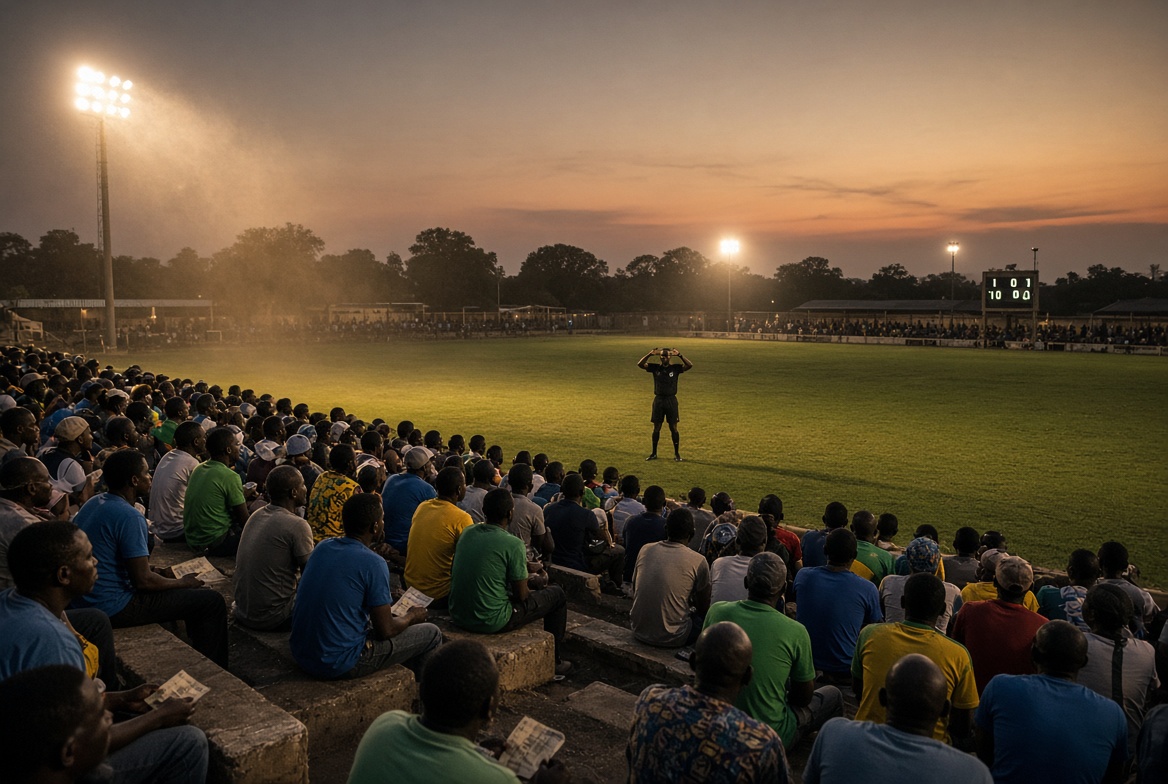
VAR is coming to Zimbabwean football, and in plain language it is a second pair of eyes. Zvakanaka pfungwa iyoyo. Nobody with sense wants a league decided by a guess when a camera is sitting there ready to help. When ZIFA sat with FIFA people in Harare, that was not a gimmick. That was the country saying our referees, our players and our supporters deserve the same second look that other leagues already use on goals, penalties, red cards and mistaken identity.
Gratitude first, before the homework. Sakunda Holdings putting money into cameras, screens and comms at National Sports Stadium, Rufaro and Barbourfields is a technological leap our football has asked for, quietly, for years. Partners who fund the unglamorous kit deserve to be named with respect. This column is not a protest against that gift. It is a conversation about application. How do we take a good tool and tailor it so every audience in Zimbabwe can use it?
Asi a camera is not a charger from town that you plug in and the whole league suddenly has full battery. It is a culture. It changes how we cheer, how long we wait, and who gets told the story while we wait.
Three audiences, one tool
The referee is the first audience. If VAR works, he gets help on the big calls. Better a slow correct penalty than a fast wrong one that starts a fight at the taxi rank. Training local officials on site, in our own grounds, is part of the gift. That should make our people more ready for CAF nights as well as PSL Saturdays.
The second audience is iwe uri kumba. Sofa. Bottle store. Twenty cousins on one phone. Television already pauses. You see the replay. Uncle says never a penalty. Cousin says the man was diving like he saw a snake. VAR gives that argument an ending. For people at home, this technology is almost entertainment. They are not the ones we should worry about most.
The third audience is iwe watenga ticket. You paid. You came by kombi. You are in the stand. When the referee draws that little TV shape with his hands, your match has been paused. If nobody tells you the plot, the pause becomes kumira with no explanation. That wait is not a reason to reject VAR. It is the part we must design for, or the people who keep the league alive with their bodies will feel like guests at their own wedding.
What other countries already learned
England is not Harare. We do not need to pretend it is. But a stand is a stand. People came to shout, not to queue for a meeting.
Their top league kept VAR and is still arguing about the wait. Their second league looked at a cheaper version this year and said not now, mainly because clubs feared the crowd would go quiet. A supporters survey of almost 8000 top flight fans found three out of four unhappy with how VAR felt, not always with the idea of a replay itself. Nine in ten said the joy of a goal had been interrupted. Goal line technology, which answers immediately, people still liked. Instant is fine. Standing around like you are waiting for a kombi that is around the corner is what wears the smile off the afternoon.
Some famous grounds there did not even have a big screen for years. The crowd heard a roar, then a hush, then gossip. By the time the answer arrived, the feeling was already tired. That is the lesson worth borrowing. Not throw VAR away. Show the people in the seats what the people on the sofa can already see.
Write the aim in Form 4 English
Before anyone climbs a roof with a camera, write the desired outcome in words a teenager in Gokwe can read.
We want fewer howlers on penalties and goals. We want reviews that are short, not a full investigation of someone's sock. We want referees who can work with the tool. We want a broadcast that looks serious. And we want the stand to know, quickly, why the game has stopped.
Those are not the same homework. If success means only takaisa VAR, the job is finished the day a van arrives. If success means vanhu mu stand vanonzwisisa, and the game is not parked for minutes, that is the Zimbabwe version. That is the one worth clapping for.
Our plan already has a local advantage
Here is the part to like out loud. At a World Cup, VAR often sits in another building, like a call centre serving many matches. The Zimbabwe idea is on site: the video people at the same ground as the referee. That can be quicker. That can feel like our match, not a file sent overseas for marking. Partners funding that model are helping us start on the smarter road.
Application is where honesty belongs. How many cameras at each ground? Offside is the greedy one. It eats time. One camera behind the goal and a hopeful wide shot will not draw a fair line across a crowded box. The answer is not to delay the leap. The answer is to match what VAR is allowed to judge with the pictures we actually have, then grow the pictures.
How will the crowd be told? Rufaro now has an electronic scoreboard. That is progress. It is still not a big replay of the tackle. Barbourfields is a place of noise first. National Sports Stadium can carry a bigger show, which is why it is first in line. Most PSL grounds on a normal Saturday have no jumbotron. Saka the local design might be a clear announcement, a simple graphic, even a voice that says checking a possible penalty in five seconds. Home viewers will get the replay anyway. Stadium viewers need a sentence.
Who gets VAR first, and who waits? Three stadiums by 2027 would already be a serious project. The rest of the league would still be living in the old world for a while. That can work if people know which games are under the microscope. Fairness, in a tailored plan, includes telling a fan in Kwekwe what a fan in Harare is getting this month.
The takeaway
We like VAR. We accept VAR. We are grateful that companies such as Sakunda are helping Zimbabwean football take this leap. The subjective, honest part is only this. Application must be tailored to Zimbabwe, and it must cater for all audiences.
Referees need enough cameras and enough practice. Fans at home need the replay they already love. Fans in the stand need to be in the conversation, not left standing like laundry that will not dry. If we design for those three together, VAR will feel like fairness. If we design only for the broadcast picture in someone else's head, the same good machine will feel like a meeting that started without the village.
Do not treat it like a European plug and play. Treat it like a kit that must fit Rufaro, Barbourfields and a Saturday in a smaller ground. Limit the reviews to what our pictures can support. Show or tell the crowd what is happening. Practise until the wait is short. Publish, in advance, what VAR will touch and what it will leave alone.
The people at home will enjoy the debate. The referee will take the help. The test that matters is still iwe wemu stand, the one who paid and came. If that person is told quickly, VAR becomes ours. That is not caution against progress. That is how progress stays welcome.